A cart that used to climb the neighborhood hill and now crawls up it is telling you something specific — the trick is figuring out which of about seven usual suspects is talking. These are the causes we diagnose most often at the Mesa shop, in roughly the order we check them.
You can check the first few yourself in the driveway. For the rest, call (480) 861-1436 and describe exactly when the power drops — under load, uphill, after a few minutes, or randomly. That detail usually cuts the diagnosis time in half.
1–2: The batteries, then the connections
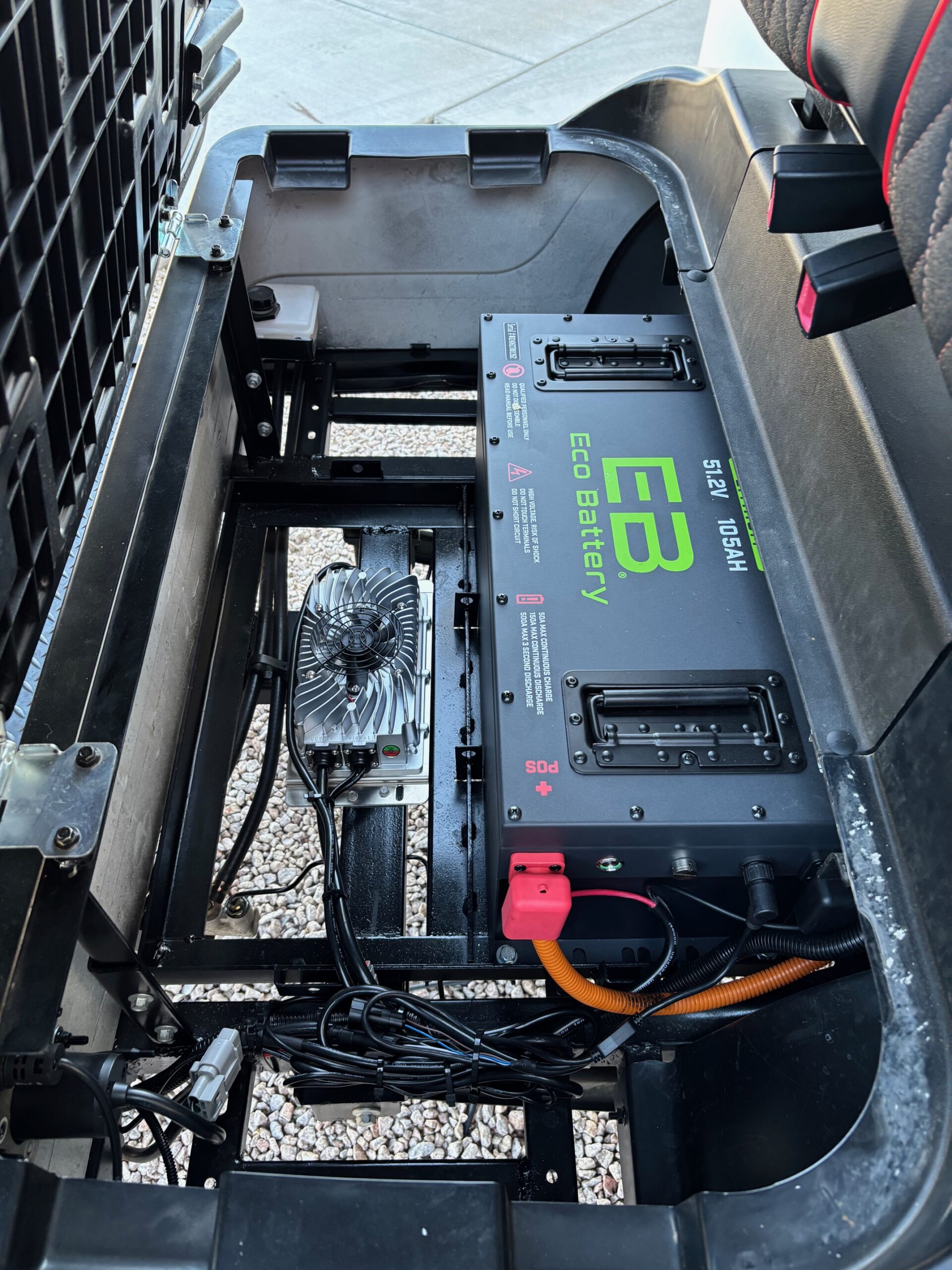
Aging batteries are the cause more often than everything else combined. A pack that charges to full but sags hard under load — fine on flat ground, gutless uphill — is the classic signature of worn cells. One bad battery in a six-battery string drags the whole pack down, so a single weak unit can make an otherwise healthy cart feel dead.
Right behind the batteries: the connections. Corroded terminals, loose cables, and heat-damaged battery lugs add resistance exactly when the cart demands current. This is the cheapest fix on this list, which is why we check it before condemning a pack.
3–4: The charger and the solenoid
A failing charger undercharges quietly — the cart leaves every morning at 80 percent and you blame the batteries. If your range has shrunk gradually and the charger shuts off suspiciously fast, the charger belongs on the suspect list.
The solenoid is the heavy-duty relay between pedal and motor. When it pits and burns internally, it can pass reduced current — the cart drives, but softly, and sometimes with a click-and-hesitate at takeoff. Solenoids are wear items; on older carts they are a routine replacement.
5–6: The controller and the motor
The speed controller meters power to the motor, and controllers can fail partially — cutting output on hills, in heat, or under sustained load. Heat-related power loss that recovers after the cart rests points this direction, and diagnosing it properly takes shop equipment.
Electric motors themselves are durable, but worn brushes and tired bearings sap power gradually. A motor that smells hot, whines, or drags is worth pulling before it fails completely and takes a tow with it.
7: The brakes are dragging (yes, really)
A surprising number of "weak" carts have healthy power and dragging brakes. Cart brakes are drum-style and cable-actuated; when cables seize or shoes fail to release fully, the motor spends half its effort fighting the brakes. Jack a wheel and spin it — if it will not spin freely, the power problem might be a brake problem.
Underinflated tires do a milder version of the same thing. Both are quick checks and cheap fixes compared to the batteries and controllers people usually blame first.
Gas cart? Different suspects, same shop
On gas carts, power loss usually traces to fuel delivery, a dirty carburetor, a tired drive belt, or a clogged air filter — Arizona dust is hard on all four. We work on gas and electric carts at the same Mesa shop, so the diagnosis process starts the same way: call and describe the symptom.
Either way, do not keep driving a cart that is losing power under load. Whatever the cause, running it harder accelerates the damage — and turns a component replacement into a bigger bill.